
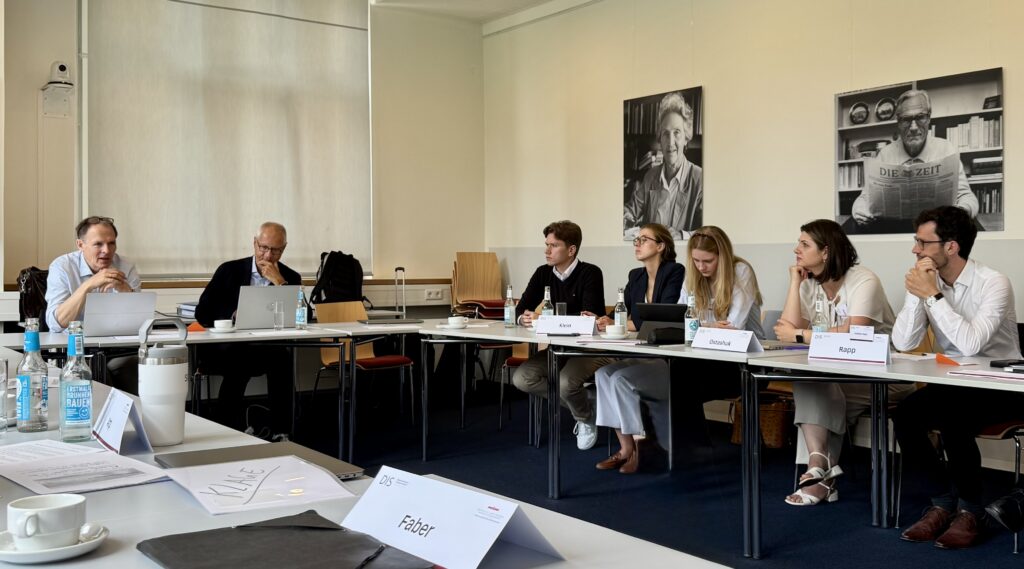
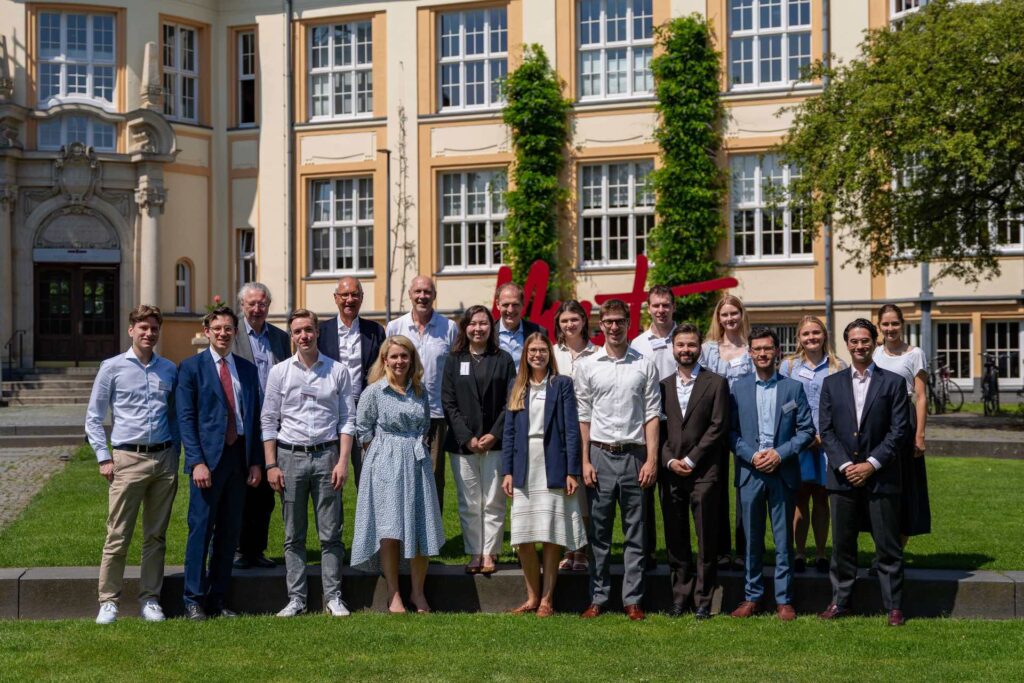
At this year’s Doctoral Seminar on arbitration and alternative dispute resolution at Bucerius Law School, PhD students gathered at the invitation of the Bucerius Centre for International Dispute Resolution and the German Institution for Arbitration (DIS). Under the joint chairmanship of Profes-sor Stefan Kröll and Professor Thomas Pfeiffer, Chairman of the DIS, ten speakers from Germany and other German-speaking countries had the opportunity over two days to present their research and discuss it with the participants.
The topics of the presentations reflected the breadth and topicality of contemporary arbitration scholarship. In the field of domestic arbitration, the focus was on fundamental questions regarding the scope and limits of arbitration agreements, for example concerning the arbitrability of certain family law matters, the binding effect in company law, and the position of third parties in arbitration proceedings. In the field of international commercial arbitration, the presentations examined cur-rent tensions between procedural efficiency and guarantees under the rule of law, the handling of cross-border evidential issues, and the dynamics of settlement negotiations during ongoing pro-ceedings. Another presentation addressed the question of what role artificial intelligence can play in the arbitral decision-making process and in the drafting of an award. The programme was rounded off by presentations on arbitration involving states and state-affiliated entities, which ex-amined both issues of party status and enforcement.
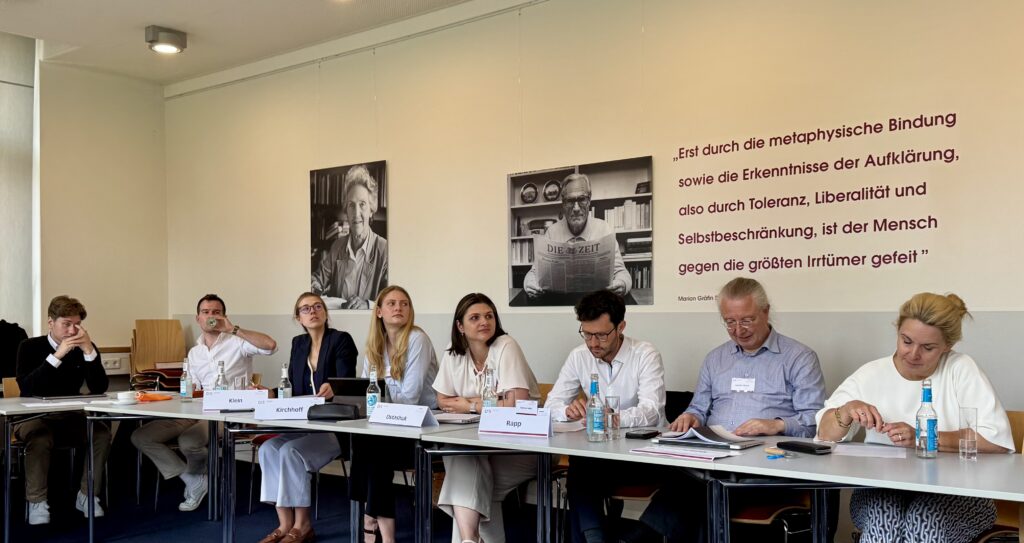
Thanks to the lively and fruitful discussions – to which, amongst others, Ulrike Gantenberg, a lawyer and member of the Board of Trustees of the Karl-Heinz Böckstiegel Foundation, Professor Joachim Münch (Georg-August University of Göttingen), Professor Karsten Thorn, Co-Director of the CIDR, and Richard Happ, a lawyer at Luther Rechtsanwaltsgesellschaft provided valuable contributions – the speakers were able to take away important insights for their future work.
The seminar also offered ample opportunity to make new contacts and network. During the lunchs and an evening get-together on the Bucerius Campus, participants were able to exchange ideas in a pleasant atmosphere and continue their academic discussions in a relaxed setting.
We would like to express our sincere thanks for the generous support once again provided by the Karl-Heinz Böckstiegel Foundation. The doctoral seminar provided a valuable contribution to aca-demic exchange in the field of arbitration this year as well, and is fostering the next generation in both academia and practice.
 English
  German